
Best Matcha UK: 3 Picks for 2026
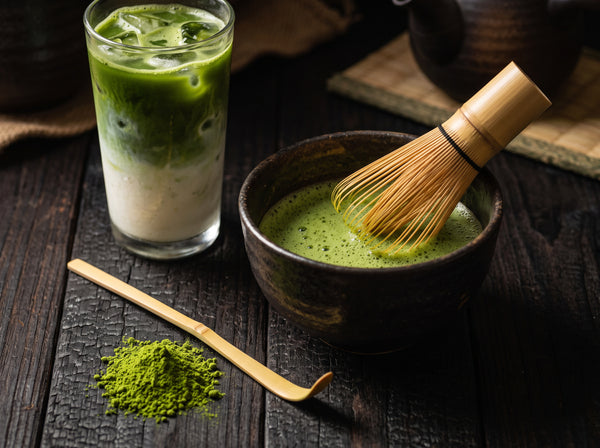
Matcha (抹茶) is green tea you drink whole. The leaves are shaded for about 20 days before picking, steamed, dried flat without rolling into a leaf called tencha, and then milled to a fine powder. Because you whisk the powder into water rather than steeping it, you take in the whole leaf. This guide explains how to choose matcha, what the grade words mean, and the three matcha products we stock right now. We do not sell a plain matcha powder at the moment, so our picks are for lattes, iced green tea and drinks; the buying advice below works for any plain matcha you are looking at.
Source: ODANI KOKUFUN matcha specification (November 2025); MAFF, "Japanese Green Tea" brochure.
| Product | Best for |
|---|---|
| Odani Kokufun, Sweet Green Tea Powder with Uji Matcha, 100g | Sweet iced green tea and lattes, no whisk needed |
| Meets, Matcha Latte Concentrate, 500g | Pouring matcha lattes fast, hot or iced |
| Myo-Cha Matcha Liqueur, 500ml | Matcha cocktails and long drinks |
What makes matcha different from other green tea?
Shading is the difference. Grown under reed screens or similar cover, the leaves turn thin and bright green and build up theanine, the amino acid behind umami, while astringency drops. Japan's farm ministry describes tencha as strongly savoury and low in astringency, with a nori-like "covered aroma" known as ooika (覆い香). After drying, stems and veins are taken out and the leaf is milled. Some makers use stone mills; Odani Kokufun in Kochi uses a ball mill in a cool room so heat does not dull the colour or flavour.
Source: Marukyu Koyamaen, "Knowing matcha" (reworded); MAFF aff magazine, April 2022; ODANI KOKUFUN matcha specification.
1. Odani Kokufun, Sweet Green Tea Powder with Uji Matcha, 100g: best for iced green tea and lattes
This is a sweetened green tea powder with Uji matcha blended in, the café-style drink sold in Japan simply as "green tea" (グリーンティー). It is made by Odani Kokufun, a tea and grain-powder company in Kochi, on the island of Shikoku. It is already sweet, so there is no syrup to make, and it stirs in with a spoon.
- Iced green tea: stir into cold water or milk over ice.
- Latte: mix to a paste with a little warm water, then top up with steamed milk.
- Desserts: dust over ice cream, or use as the base of a green tea syrup for kakigōri (shaved ice).
Worth knowing: this is not plain matcha. It is a sweetened drink powder that contains matcha, so for whisked tea, or for baking where you want to control the sugar, use plain matcha. Ingredients and allergens are still to be added to our listing, so check the pack label.

Source: SushiSushi product listing, Odani Kokufun Sweet Green Tea Powder (read 3 November 2026); Odani Kokufun company website (homepage, retrieved 15 July 2026).
2. Meets, Matcha Latte Concentrate, 500g: best for pouring matcha lattes fast
A ready-to-dilute matcha base made in Japan, for counters that pour a lot of matcha drinks. There is nothing to sift or whisk, so each drink comes out the same.
- Hot latte: pour a measure into hot or steamed milk and stir to taste.
- Iced: pour over ice with cold milk or a milk alternative.
- Sparkling: top up with soda water.
- In the kitchen: swirl through ice cream, cream, glazes and desserts.
Worth knowing: keep it cool and out of direct sunlight, and refrigerate it once opened. Follow the label for how much to use.

Source: SushiSushi product listing, Matcha Latte Concentrate 500g (read 3 November 2026).
3. Myo-Cha Matcha Liqueur, 500ml: best for matcha cocktails
A liqueur made with finely ground Japanese green tea, for anyone who wants matcha after dark. It balances sweetness against matcha's bitterness.
- Serve: chilled, or over ice as an aperitif.
- Mix: as the base of a matcha cocktail, or long with milk or tonic.
- Store: unopened in a cool, dark place; once opened, keep it sealed and drink it within a few months.
Worth knowing: it is an alcoholic drink, for over-18s only.

Source: SushiSushi product listing, Myo-Cha Matcha Liqueur (read 3 November 2026).
To go with it: Kōmi Wasanbon Sugar, 500g
If you want to sweeten plain matcha, our own Kōmi wasanbon is a very fine-grained cane sugar from Tokushima and Kagawa on Shikoku, made from a slender local cane and worked by hand. The grain is fine enough to stir into matcha without leaving grit, and it is the sugar pressed into higashi, the small dry sweets served with tea. The only ingredient is sugar cane.

Source: SushiSushi product listing, Kōmi Wasanbon Sugar 500g (read 3 November 2026).
How to choose matcha
Plain or sweetened? Plain matcha is milled tencha with nothing added. Sweetened green tea powders mix sugar with a share of matcha. Read the ingredients: if sugar comes first, it is a drink mix, not matcha.
Grade words. There is no single grading scale shared by every maker; each uses its own names, and words like "ceremonial" and "culinary" are shop labels rather than an official standard we can point to. What makers do agree on is the direction. Marukyu Koyamaen, in Uji, says any matcha can be made as thin tea (usucha), but only its least astringent, higher grades suit thick tea (koicha). Odani Kokufun's specification separates a top grade from spring leaves, bright green with a strong shade-grown aroma, from an everyday blend of leaves from different seasons, which is yellow-green. Bright green, spring leaf and a clear ooika aroma point to the drinking end; yellow-green blends suit lattes and baking.
Where it is from. Japan's main tencha prefectures are Kagoshima, Kyoto and Shizuoka. Uji, south of Kyoto, has grown tea since the monk Myōe planted it there from seed that Eisai brought back from China in 1191.
Freshness. Buy a pack you will finish soon after opening. Matcha, like all green tea, fades with moisture, light, heat and strong smells.
Source: SushiSushi Masterclass record "Matcha"; Marukyu Koyamaen, "Knowing matcha" and "History" (reworded); ODANI KOKUFUN matcha specification; MAFF aff magazine, April 2022; MAFF "Japanese Green Tea" brochure.
How to make matcha
Japan's farm ministry gives about 1.5g of matcha per bowl, which is 2 to 3 scoops of a bamboo chashaku, with hot water, whisked with a bamboo chasen to a fine foam. For water temperature and the amount of water, follow the guide on the pack.
Source: MAFF, "Japanese Green Tea" brochure.
Matcha FAQ
Is sweet green tea powder the same as matcha?
No. Matcha is pure milled tencha. Sweet green tea powder is sugar blended with green tea and a share of matcha, made to stir into water or milk.
What is ceremonial grade matcha?
It is a selling term, not a standard shared across makers. Makers grade matcha their own way; the useful signs are spring leaf, a bright green colour, a clear shade-grown aroma and low astringency. In the tea ceremony, only the least astringent grades are used for thick tea (koicha).
How much matcha do I use?
About 1.5g per bowl, 2 to 3 chashaku scoops, whisked to a fine foam in hot water. Follow the pack for the water temperature.
How should I store matcha?
In an opaque, sealed container somewhere cool and dark, away from moisture and strong smells, and use it soon after opening. If you keep it in the fridge, keep it away from other food smells.
Can I bake with matcha?
Yes. Japan's farm ministry lists green tea in sponge cake, chocolate and bread. Use plain matcha so you control the sugar; a sweetened powder adds sugar to the recipe.
Shop Japanese tea
See our full tea range in the Japanese Tea collection, and read our Japanese green tea guide.
Sources for this page: SushiSushi Masterclass records "Matcha" (store/matcha/matcha.md), "ODANI KOKUFUN" (store/matcha/odanikokufun.md) and "Japanese green tea" (store/tea/tea.md), drawing on the ODANI KOKUFUN matcha specification (11 November 2025); Marukyu Koyamaen's "Knowing matcha" and history pages (© Marukyu Koyamaen, retrieved 15 July 2026); the Odani Kokufun website (© 小谷穀粉株式会社, retrieved 15 July 2026); the Ministry of Agriculture, Forestry and Fisheries of Japan, "Japanese Green Tea" brochure and aff magazine, April 2022 (© MAFF, retrieved 3 November 2026); and SushiSushi product listings (read 3 November 2026). Facts are reworded; no text is reproduced.

